A handrail is rarely one continuous line.
Some end halfway across a landing. Others have gaps, interrupted sections or unfamiliar profiles. Each transition changes the fit, the route and whether a purpose-designed extension is needed.
STAIRIO / RESEARCH & DEVELOPMENT
Following a handrail looks simple. Understanding every stairwell is the real challenge.
We’re building toward a specialized world model: a way for Stairio to understand its environment, rehearse its actions and choose where to look before the next inspection.
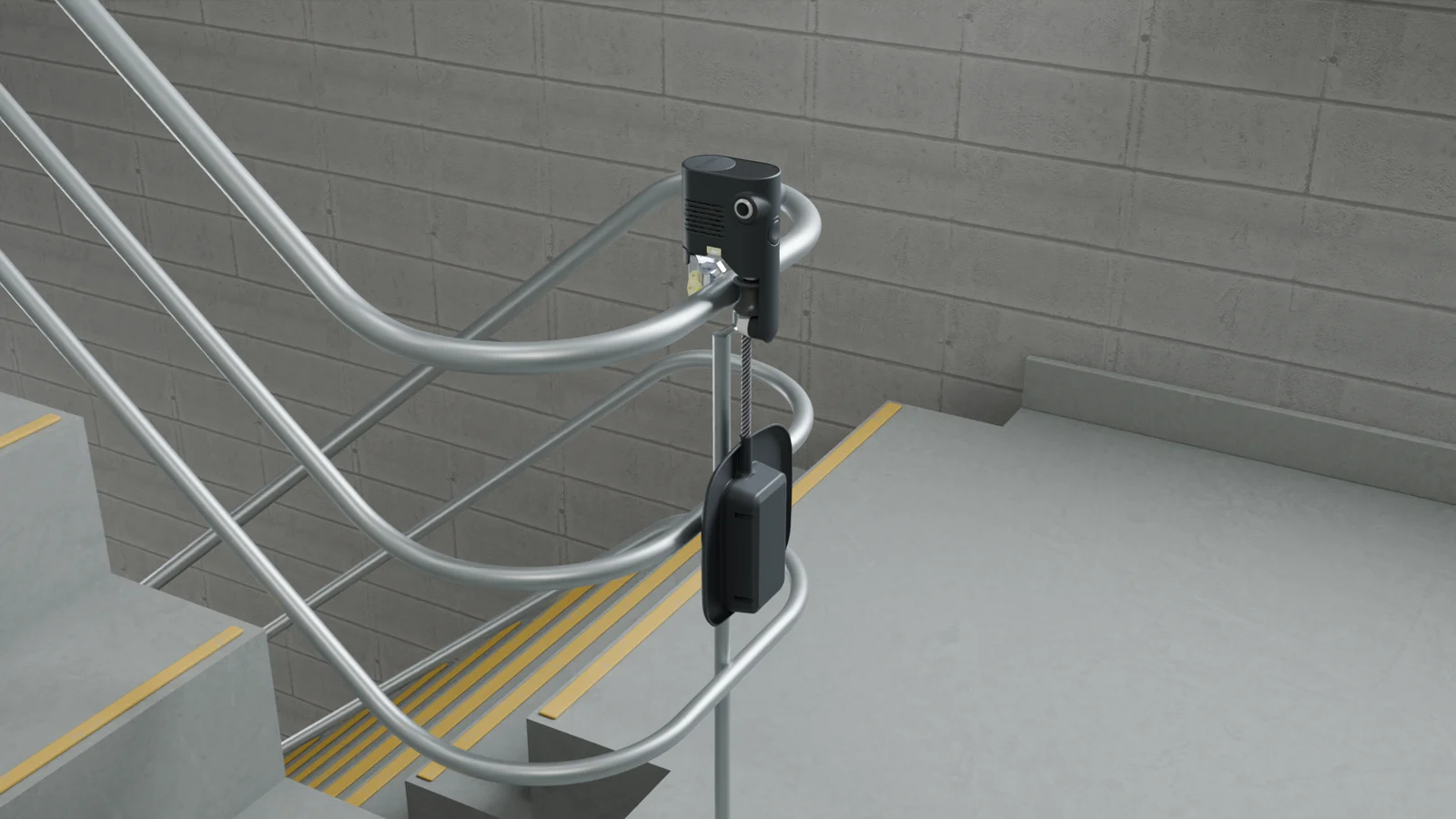
THE HARD PART OF A SIMPLE IDEA
A specialized robot can keep its job focused. Its understanding of the physical world still has to be rich.
Some end halfway across a landing. Others have gaps, interrupted sections or unfamiliar profiles. Each transition changes the fit, the route and whether a purpose-designed extension is needed.
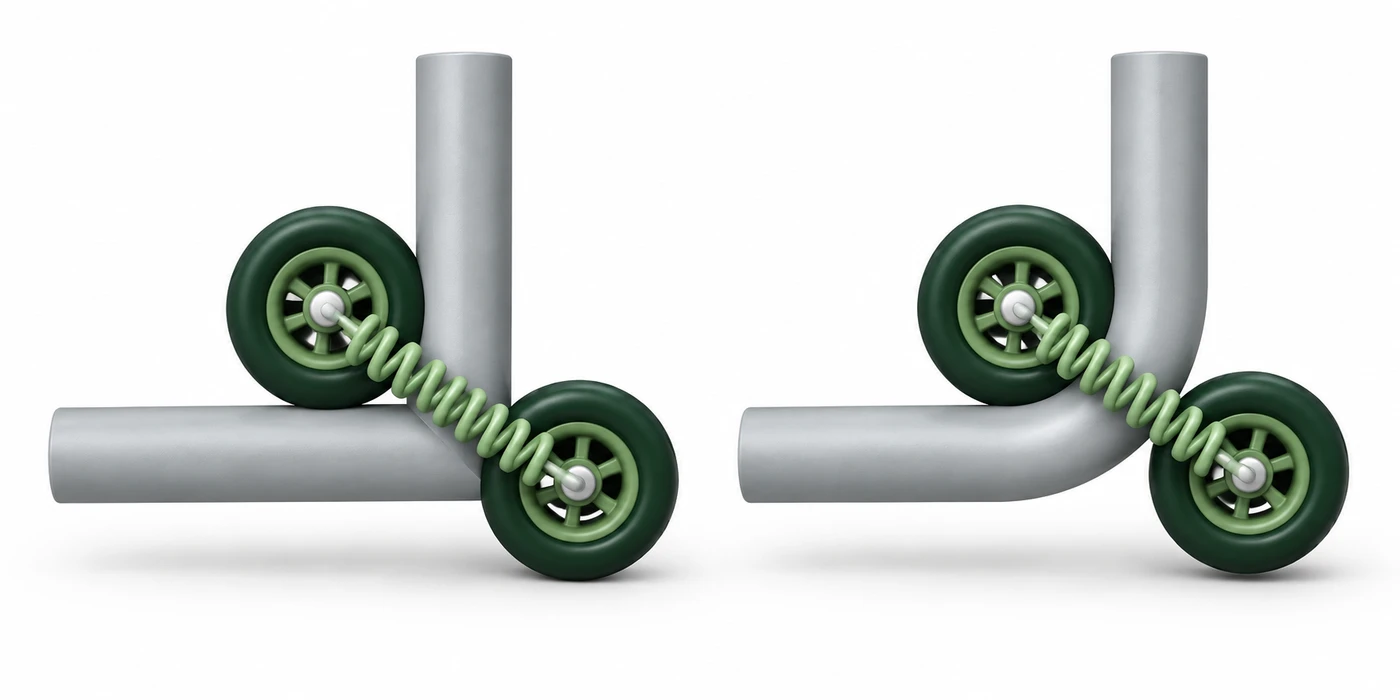
Rail shape, bend radius and incline affect wheel contact, clamp travel and battery clearance. A smooth-looking path still needs to be checked against the robot’s actual geometry.
A SPECIALIZED WORLD MODEL
Our model combines where each photo was taken with where an object sits in it, to place and size a hazard in the real stairwell, without stereo cameras or LiDAR.
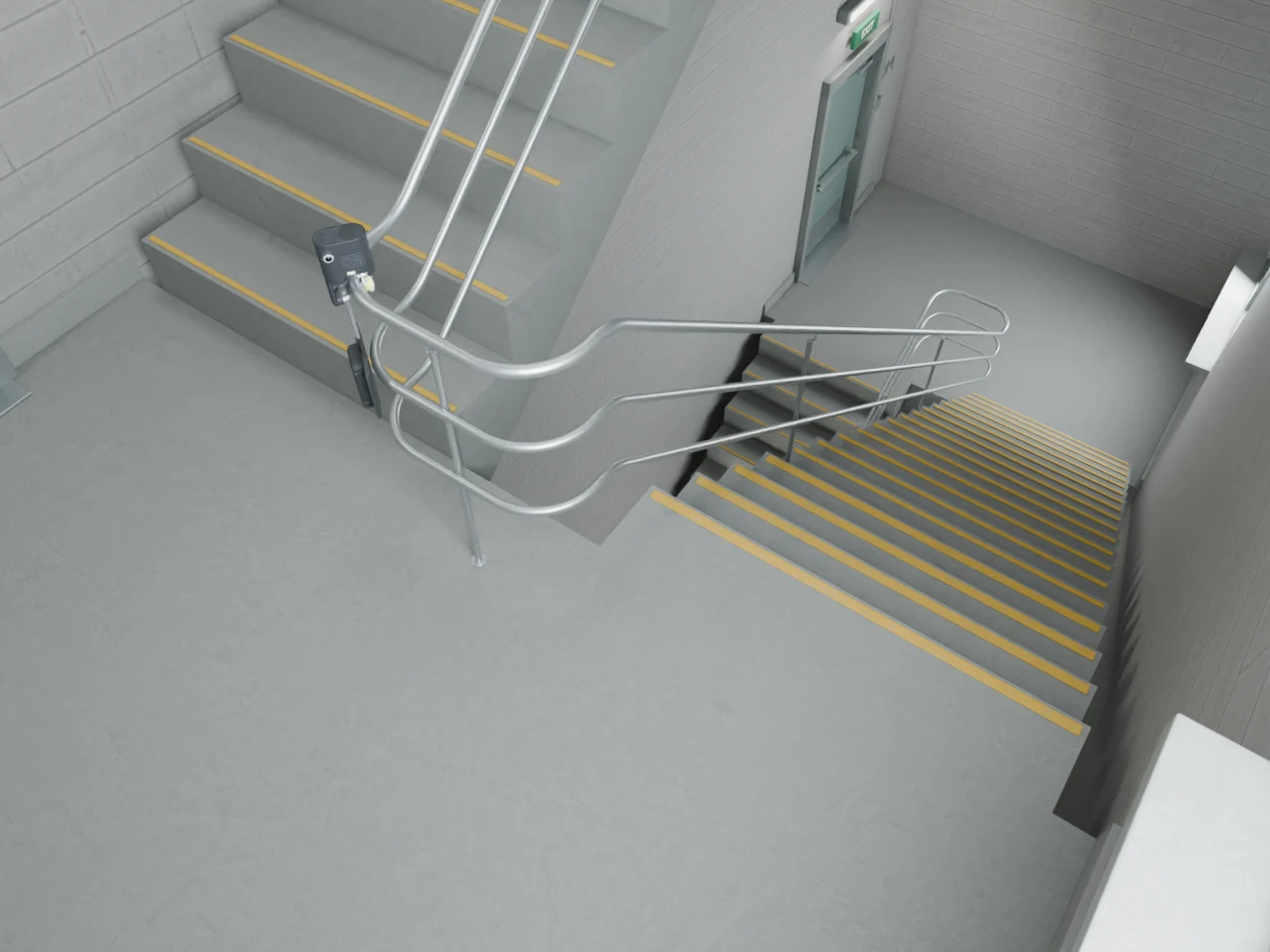
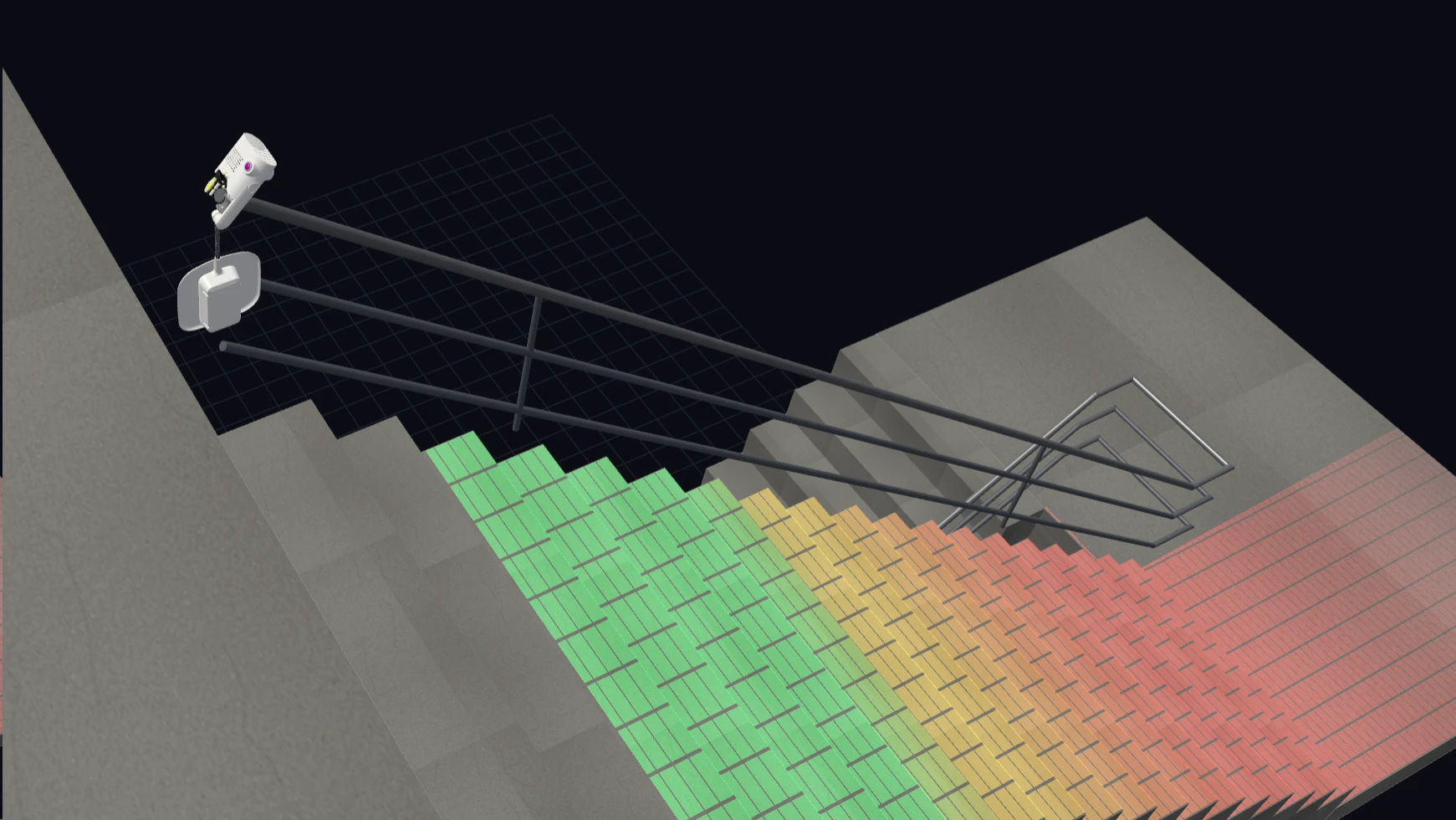
Combine measurements with overlapping images to reconstruct flights, landings, rails and obstacles. Keep measured, inferred and unseen regions distinguishable.
Generate labeled synthetic views across different layouts, lighting and occlusions to train our vision model, then evaluate on independent real-world captures.
Run candidate routes and capture strategies in the same environment. Compare what is visible, where the robot fits and what remains uncertain.
FROM TRAINING DATA TO BETTER DECISIONS
We plan where the robot takes each photo, so the stairwell is fully covered with as few stops as possible.
An object can be in view but too small in the image to detect. We test our cameras’ effectiveness to understand how much detail each capture needs to preserve, then balance image count, coverage and inspection time.
A detailed scan prioritizes finer detail, using more captures where needed to inspect small objects. The capture plan adapts to the level of detail the inspection requires.
A quick scan prioritizes speed, using fewer captures to meet the coverage needed for a routine overview. The goal is to cover the required areas with less time spent taking images.
TESTED BEFORE IT CLIMBS
We are building a simulator where each stairwell we meet becomes a test case, so the robot’s route and its response to difficult moments are rehearsed before it reaches a building.
Rails that end mid-landing, gaps and tight bends, rebuilt from site surveys.
Lost signal, a stalled motor or a missed turn, replayed on demand.
Each update is checked against the same scenarios before it goes to site.
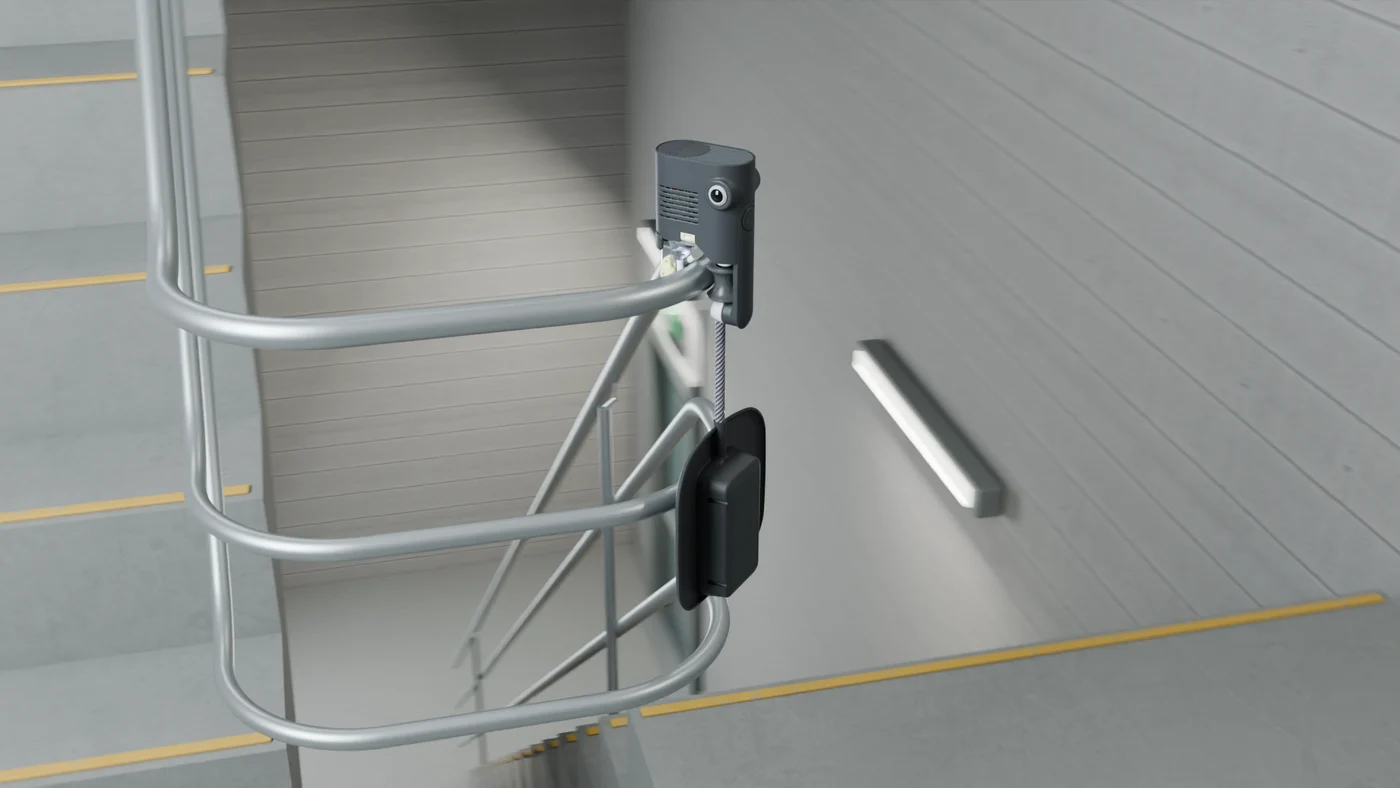
Clearance at a turn, where the battery hangs, how the wheels grip a bend: checked against the robot’s real geometry before a site visit, so pilots start with fewer surprises.
OUR RESEARCH THESIS
A focused task gives us a bounded world to model and improve. Every building we visit makes the next one easier.
Talk to our team